3 – 5 years

Preschool

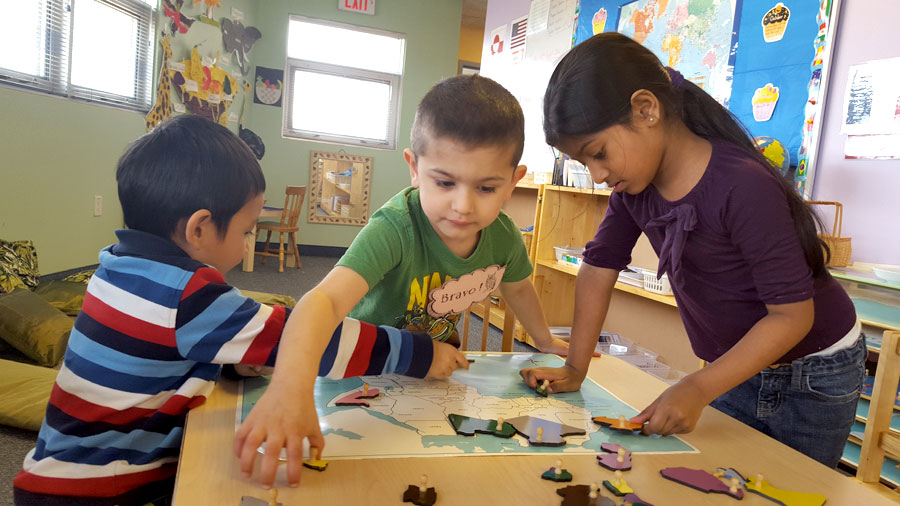
The Montessori children's house: a prepared environment where children move from simple work to more complex work, at their own pace.

A prepared environment

The Montessori classroom is a prepared environment that invites children to be active explorers. Knowledge is offered through scientifically designed materials, trained staff, and presentations.

Each child progresses from simple activities to more complex ones. Curiosity is met with real work, and children begin to feel the joy of discovering the world around them.

Classroom explorations connect learning with the wider world. Themes such as Earth, landforms, volcanoes, and space bring together stories, new vocabulary, hands-on activities, and art.

What children develop

  • Independence
  • Concentration
  • Problem solving
  • Cooperation

Offered at

The classroom

Five areas of Montessori work

Children meet these materials every day, moving from simple exercises to more complex ones.

Practical Life

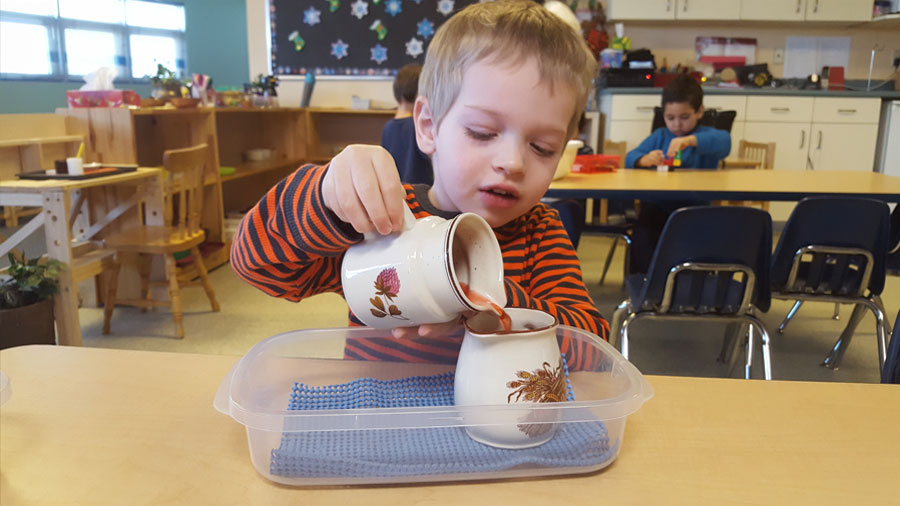
Practical life is the foundation for the rest of the classroom. Purposeful work such as pouring, spooning, dressing, cleaning up, and grace and courtesy helps children take care of themselves, other people, and the room. Along the way they practise respect, patience, confidence, and independence.
Sensorial

Sensorial materials refine a child's sense of discrimination. The exercises help children sequence, order, and categorize what they notice, so abstractions become something they can work out for themselves. Children repeat the lessons and soon make their own variations.

Language

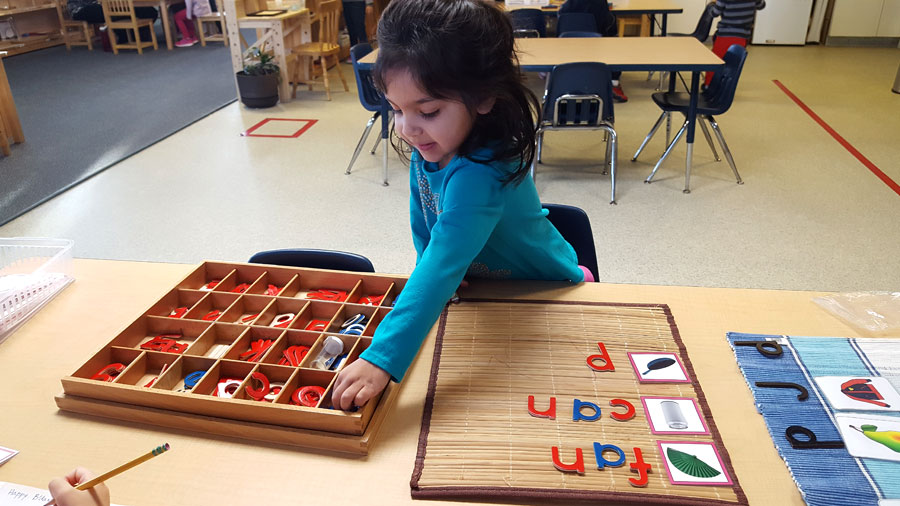
Language work builds vocabulary and prepares the hand for writing and reading. Children construct language by doing, not by sitting and being told. Writing is taught before reading. In the 3 to 6 curriculum, writing is direct preparation for reading.

Mathematics

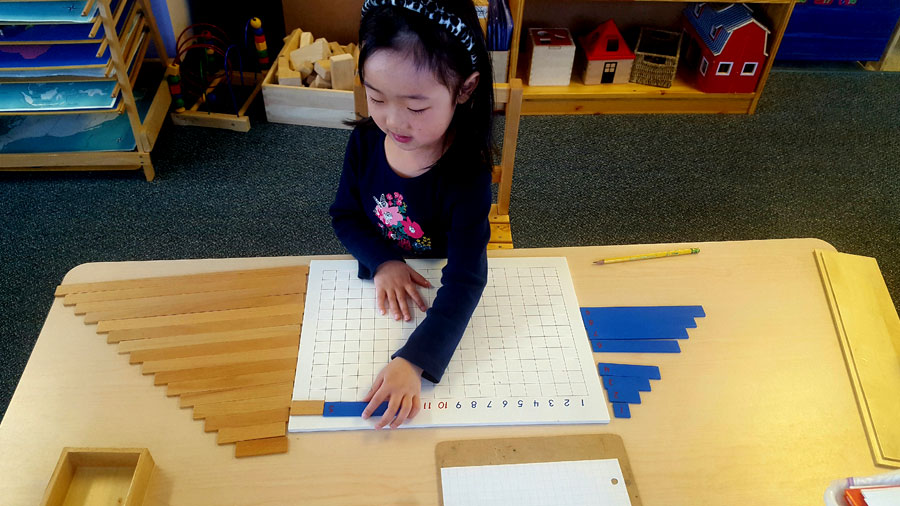
Mathematics work covers counting, number relationships, and the decimal system. The materials lay the groundwork for later, more abstract mathematics, and for sound reasoning and problem solving.

Cultural

Geography, botany, zoology, history, science, music, art, and nature study make the classroom lively and connect children to the wider human family. These themes give children a way to picture the world as a whole.

Enrichment and meals

The Enhanced Montessori Program

Music, French, and yoga complement the work of the Montessori classroom.

Kinder Music

Music and movement introduce children to the language of music in a collaborative setting. Singing, storytelling, dancing, and instruments support musical development, and also social interaction, impulse control, spatial awareness, and focused listening.

French

A visiting teacher introduces Canada's second official language, starting with numbers and colours and moving on to animals and foods. Lessons use Montessori language and math materials, with songs and dancing.

Kids Yoga

Yoga is introduced with music, games, stories, and simple poses, in a light-hearted way. Play and personal discovery help children find the poses for themselves, in a setting meant to build on their strengths and confidence.

Healthy snacks

Healthy snacks are included at no extra cost and planned for the children attending. The monthly snack menu is posted on the bulletin board and shared in advance by email or the school app.

Hot lunch

A freshly prepared hot lunch is provided for an additional fee. Mealtimes are also a chance to practise healthy eating habits and independence at the table.

Schedules

Full-day and half-day options

Monday to Friday. Each option includes the Enhanced Montessori Program.

Full Day

7:30 am – 5:30 pm

The Enhanced Montessori Program plus extended care, with healthy snacks included twice daily. Hot lunch is provided for an additional fee.

Half Day – Morning

8:00 am – 12:00 pm

The Enhanced Montessori Program with a healthy snack served daily.

Half Day – Afternoon

1:00 pm – 5:00 pm

The Enhanced Montessori Program with a healthy snack served daily.

July and August

Summer Program

The summer program runs through July and for three weeks in August. It is different from the school-year program. Every two weeks there is a new theme, and the class spends as much time as possible outside, playing, exploring, and discovering. The classroom is set up to match the theme, with art and craft work planned for those weeks.

The prepared environment stays in place, and so do independence, grace, and courtesy. Most of the activities themselves change. Children still have individual and group experiences suited to their age.

Outings

  • Farm
  • Assiniboine Park Zoo
  • Splash pad
  • Special guests
  • Neighbourhood walks
  • Conservatory
  • Aviary Museum

Occasionally at the centre

  • Water Day
  • Bouncy Castle Day
Preschool

Join the waitlist for this program

Choose a campus that offers this program, then add your child to that waiting list.